Fitzroy Roastery Clarifies Extra $3.50 Levied Strictly for Unrendered Heritage Dust
Forensic tasting unit fails to locate the missing economic value at the bottom of an eight-dollar oat flat white, discovers it was reinvested in untreated 1890s masonry, rusted iron beams, and unhurried eye contact.

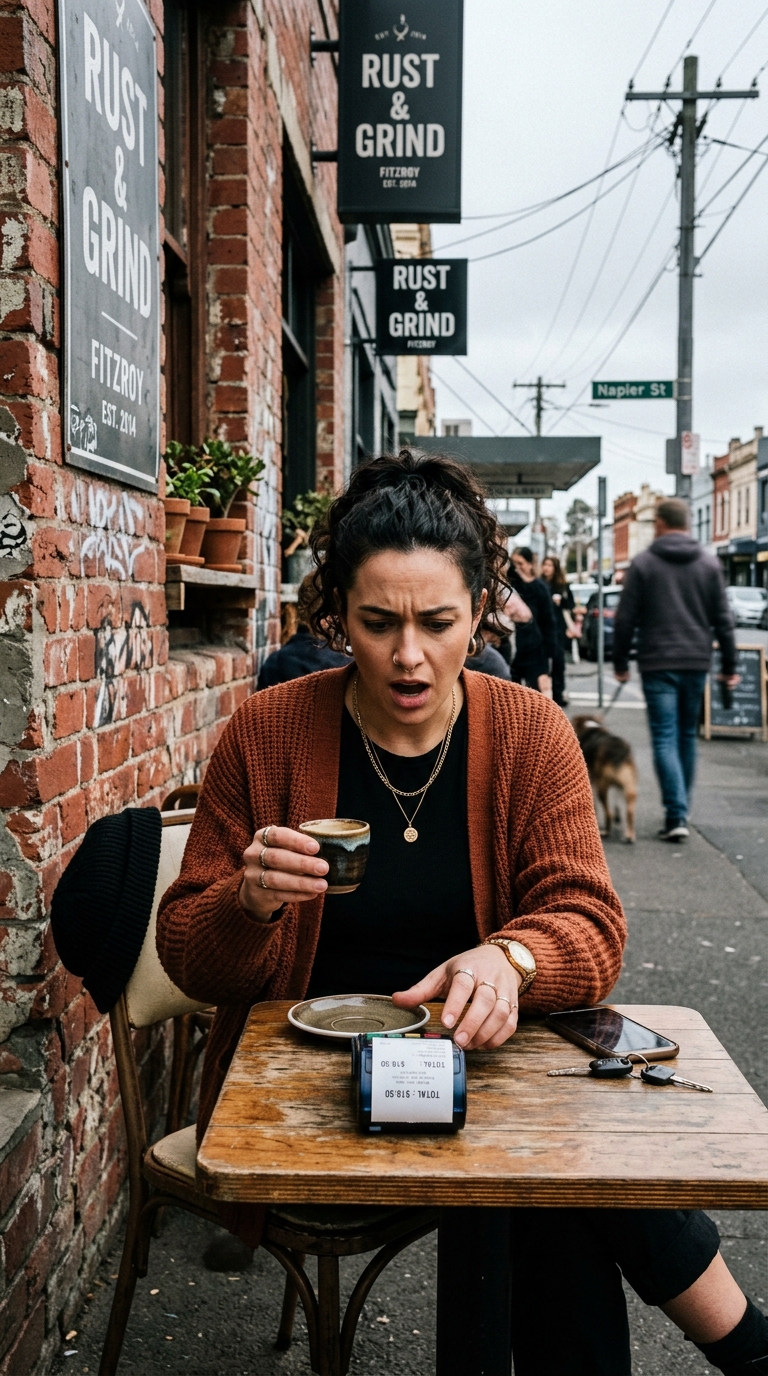
When Fitzroy graphic designer Julian Vance tapped his contactless card for a morning flat white and noted a transaction total of $8.20, he initially assumed he had accidentally funded a micro-share in the establishment’s espresso grinder.
Following an itemised invoice request submitted under DCO investigative guidelines, the cafe—housed inside an unrestored former textile dyeing mill on Gertrude Street—clarified that the beverage itself accounted for just $4.50 of the surcharge. The remaining $3.70 was designated as a “Spatial Heritage Maintenance Levy.”
“People think exposed brick is cheap because it’s unfinished,” explained cafe director and head roaster Jasper Lindqvist, 31, while adjusting a pair of round tortoiseshell frames. “In reality, hiring specialised heritage masons to chip off sixty years of functional plaster so that genuine 1894 terracotta lime dust can drift gently into your microfoam costs thousands of dollars.”
“You aren’t just sipping Ethiopian heirloom washed beans. You are breathing in microscopic particulate matter from the Victorian gold rush. That is value you cannot replicate in a modern shopping mall.” — Jasper Lindqvist, Certified Coffee Philosophiser
“It is the classic unmitigated Fitzroy conceit. You take a derelict textile factory, paint nothing, leave the lime mortar where it settled in 1894, and charge the populace eight dollars fifty for the privilege of inhaling industrial antiquity. It is fiscal hocus-pocus masquerading as high caffeine culture.” — Parliamentary critique delivered in the spirit of Paul Keating
Tasting Notes and Payment Terms: The New Economic Pair
The true stroke of Fitzroy genius, however, is not the masonry itself, but the seamless pairing of lyrical sensory poetry with aggressive corporate debt terms.
On a hand-stamped recycled card presented alongside the brew, patrons are invited to contemplate “delicate tasting notes of candied Meyer lemon, wild elderflower, and rain-soaked river stones.” Flip the card over, and the sensory romance instantly gives way to institutional debt covenants: “Payment Terms: Immediate upon eye contact. Weekend surcharge 10%. Public holiday penalty 15%. Contactless tap levy 1.9%. Non-negotiable Spatial Heritage Contribution $3.50. Table clearing is strictly self-service.”
“You read the front and you’re dreaming of high-altitude Ethiopian mountain slopes. You read the back and you realise you’ve just signed a commercial credit agreement with an uninsulated garage.” — Hamish MacLeod, Gastronomic Inflation Bureau
The Itemised Receipt of Existential Upcharges
The Daily Carry On’s forensic audit department deconstructed the full billing structure of the morning order. In addition to standard bean extraction and artisanal oat milk charges, customers are now subjected to a cascading hierarchy of lifestyle surcharges:
- Base 6oz Flat White: $4.50 (Fair trade, double-shot, respectable extraction).
- Oat Milk Transition Penalty: $1.20 (A punishment tax for not metabolising bovine lactose like our ancestors).
- Exposed Red Clay Brick Exposure: $1.10 (Direct view of unpointed mortar joints and redundant industrial water pipes).
- Plywood & Raw Steel Seating Discomfort Fee: $0.70 (Ensuring customers depart within twenty minutes so the bench turnover rate remains profitable).
- Ambient Japanese Ambient Jazz Soundtrack: $0.70 (Vinyl record spun on a belt-driven turntable behind the cash register).
The Customer Standoff
Despite growing resentment over crossing the eight-dollar threshold for morning caffeination, consumer surveys indicate Melbourne office workers remain entirely powerless against the psychological trap of the aesthetic cafe.
“I told myself I’d buy coffee from the standard bakery down the lane for $4.20,” admitted regular patron Sarah. “Then I walked past and saw they had fluorescent tube lighting and laminated menus. My nervous system couldn’t handle the aesthetic indignity. I walked straight back to Jasper, paid $8.50, and thanked him for the privilege.”
The Daily Carry On reminds all consumers: until plastering returns as a fashion statement in inner-city hospitality, you are legally entitled to scrape one grain of heritage mortar into your pocket to recoup your investment.